

Table of Contents
- What Nationally Recognised First Aid Course Requirements Actually Mean
- Prerequisites for Enrolling in a Nationally Recognised First Aid Course
- Step 1: Meet the Core Unit Requirements
- Step 2: Complete the Assessment Methods Used in Nationally Recognised Courses
- Step 3: Understand Workplace First Aid Compliance Standards
- Step 4: Check First Aid Certificate Renewal Frequency
- Step 5: Learn How to Verify RTO Accreditation
- Conclusion
- Frequently Asked Questions
Last Updated: October 2, 2026
What Nationally Recognised First Aid Course Requirements Actually Mean
A nationally recognised first aid course is training that leads to a statement of attainment issued under the Australian Quality Training Framework, delivered by a registered training organisation (RTO). That single fact separates real certification from the certificates that get people turned away at site gates.
This guide from Eyzon Health & Safety breaks down the requirements step by step. You will learn which units you need, how assessment works, and how to check a provider is genuinely accredited.
Most people never check. They book the cheapest option, pay, and discover the problem later. Here is what the requirements actually involve.
Prerequisites for Enrolling in a Nationally Recognised First Aid Course
There are almost no academic prerequisites. You do not need a Year 12 certificate, a police check, or prior first aid experience to enrol.
What you do need:
- A reasonable level of physical fitness for CPR compressions on a manikin
- The ability to kneel on the floor for practical demonstrations
- Basic English literacy for written questions
- Photo identification on the day
Some providers set a minimum age, often 14, for entry-level units. If reading and writing is a worry, ask about verbal assessment options before you book.
Eyzon Health & Safety trainers come from over 10 years of hands-on trade experience, so they understand students who have been out of a classroom for years. That matters more than most course brochures admit.
Step 1: Meet the Core Unit Requirements
The core requirement is completing the correct national unit for your industry. First aid certification is not one generic course.
HLTAID011, HLTAID012 and HLTAID014: Which Unit Do You Need?
Each unit serves a different workplace:
|
Unit |
Full Name |
Who Needs It |
|---|---|---|
|
HLTAID011 |
Provide First Aid |
Most workplaces, trades, site staff |
|
HLTAID012 |
Provide First Aid in an Education and Care Setting |
Childcare, early learning, school staff |
|
HLTAID014 |
Provide Advanced First Aid |
Supervisors, remote and high-risk sites |
Pick the wrong unit and your certificate will not satisfy your workplace. Check with your employer before you enrol.
Step 2: Complete the Assessment Methods Used in Nationally Recognised Courses
Assessment in a nationally recognised course has two parts: knowledge and practical performance.
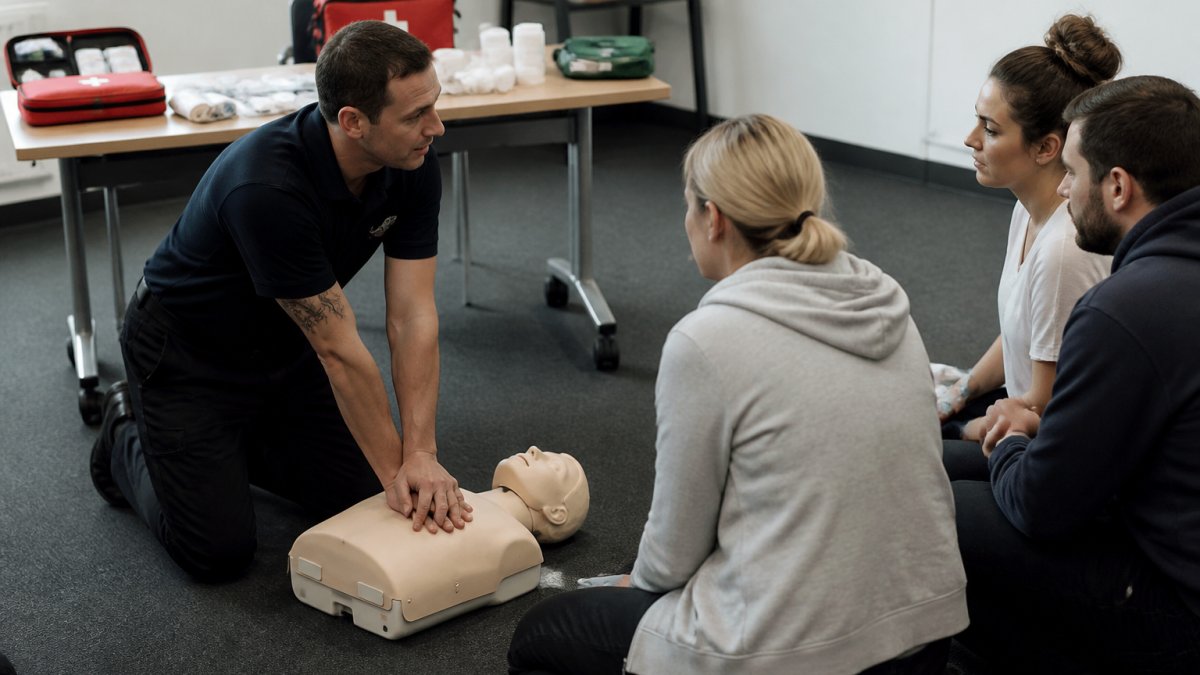
The written component covers emergency response theory, legal considerations, and incident reporting. The practical component requires you to demonstrate CPR on a manikin, apply bandages, and manage a simulated casualty.
You must be assessed as competent in every task. There is no partial pass. If you miss a critical step in a CPR sequence, you repeat that assessment.
Online learning can cover the theory. The practical assessment still happens in person, because a manikin cannot be compressed through a screen.
Step 3: Understand Workplace First Aid Compliance Standards
Workplace first aid compliance standards come from the model Work Health and Safety Regulations, which each state and territory applies through its own regulator. Safe Work Australia publishes the model Code of Practice that sets out how many trained first aiders a workplace needs.
The requirements depend on your risk profile:
- Low-risk offices may need one trained first aider
- High-risk construction sites typically need more, plus a stocked first aid room
- Remote worksites need advanced first aid coverage
Your employer, not your training provider, decides how many first aiders the site needs. Eyzon Health & Safety partners with Admire Workplace Safety.
For the current rules, check the Safe Work Australia model Code of Practice for First Aid in the Workplace.
Step 4: Check First Aid Certificate Renewal Frequency
First aid certificate renewal frequency depends on the unit, but the standard rule is every three years for the main certificate, with CPR refreshed every 12 months.
That annual CPR requirement catches people out. A first aid certificate can still be current while the CPR component inside it has lapsed. Many employers treat an expired CPR refresher as an expired certificate.
Set a reminder at the 11-month mark. Booking early beats scrambling the week your site induction is due.
Step 5: Learn How to Verify RTO Accreditation
Knowing how to verify RTO accreditation takes about two minutes and protects you from worthless certificates.
Follow these steps:
- Ask for the provider’s RTO code before you pay
- Search that code on the national register
- Confirm the specific unit you need sits within their scope
- Check the statement of attainment carries the RTO code and national unit codes
A certificate without a valid RTO code is not nationally recognised, no matter how official it looks. The national training register lets you confirm both the provider and the unit in one search.
Eyzon Health & Safety is an accredited RTO and SafeWork NSW approved, so your statement of attainment is issued correctly the first time. Certificates are issued same day on a successful pass.
Conclusion
Sorting out nationally recognised first aid course requirements comes down to three checks: the right unit, a registered provider, and a current CPR refresher. Get any of those wrong and your certification will not hold up when it matters.
Eyzon Health & Safety makes that straightforward with nationally recognised statements of attainment, flexible online and face-to-face delivery, and trainers who explain things in plain language. Same day certificates mean you are not waiting around before your next shift.
Get started with Eyzon Health & Safety and book a course that stands up on any site. Visit www.eyzonhealthandsafety.com.au to enrol.
Frequently Asked Questions
How often do I need to renew my nationally recognised first aid certificate?
Most nationally recognised first aid certificates stay current for three years, but the CPR component must be refreshed every 12 months. If you work in a role where your employer requires currency, letting either lapse can affect your compliance. Diarise the CPR refresher separately from the full requalification so you don’t get caught out. Many providers send reminders, but the responsibility sits with you. Check your statement of attainment for the exact dates.
What are the requirements for first aid in the workplace?
Under the model WHS laws, a person conducting a business or undertaking must provide adequate first aid facilities, trained personnel and access to first aid equipment. What counts as adequate depends on your industry, workforce size and risk profile. A construction site typically needs more than an office. The minimum qualification for a workplace first aider is usually HLTAID011 Provide First Aid, though some high-risk settings require additional units. Check your state or territory regulator for specific guidance.
What is the difference between HLTAID014 and HLTAID011 courses?
HLTAID011 Provide First Aid is the standard entry-level unit covering CPR, choking, bleeding, shock and basic casualty care. HLTAID014 Provide Advanced First Aid goes further, covering advanced airway management, oxygen therapy, spinal immobilisation and team leadership in emergency response. If you work in remote areas, high-risk construction or supervisory roles, HLTAID014 may be required. For most general workplace compliance, HLTAID011 is the minimum. Some employers ask for both.
How do I verify that a training provider is properly accredited?
Every registered training organisation must hold current registration with ASQA or a state regulator such as SafeWork NSW. You can check the national training register to confirm the provider’s scope includes the first aid units you need. A legitimate provider will issue a statement of attainment with a nationally recognised code. If a course doesn’t carry a unit code or the provider can’t show registration, it won’t be accepted on site or by employers.