

Table of Contents
- Quick Comparison: White Card Webinars Alternative Options for Students
- What Is SWMS in Construction Safety and Why It Matters Before You Enrol
- Construction Induction Training Requirements: What Students Need to Know in 2026
- Eyzon Health & Safety: Trade-Experienced Training with Admire Workplace Safety
- Blue Dog Training: Self-Paced Online Learning for Independent Students
- Urban E-Learning: Budget-Friendly Digital Delivery with Fast-Track Options
- How to Choose the Right White Card Webinars Alternative for Your Situation
- Frequently Asked Questions
Last Updated: September 27, 2026
Quick Comparison: White Card Webinars Alternative Options for Students
The best white card webinars alternative for students depends on how you learn and how fast you need certification. Live webinars suit people who want real-time instruction, but self-paced online courses and face-to-face sessions often work better for students juggling work, study, or irregular hours.
This guide from Eyzon Health & Safety compares the realistic options, what each one costs you in time and money, and which suits different situations. Below, we break down what actually matters before you enrol.
| Option | Delivery Style | Best For | Watch Out For |
|---|---|---|---|
| Eyzon Health & Safety | Face-to-face and online, trade-experienced trainers | Students wanting support and practical context | Requires contacting for availability |
| Blue Dog Training | Self-paced online modules | Independent, flexible learners | No live interaction |
| Urban E-Learning | Digital-first with fast-track add-ons | Budget-conscious, quick turnaround | Express services cost extra |
What Is SWMS in Construction Safety and Why It Matters Before You Enrol
A SWMS (Safe Work Method Statement) is a written document that sets out how high-risk construction work will be carried out safely, step by step. It identifies the hazards, the controls, and who is responsible for each part of the job.
Understanding what is SWMS in construction safety matters before you enrol because your White Card course introduces the safety framework you’ll work inside every day. A White Card proves you completed general construction induction training, but a SWMS is the site-specific document that governs a particular task.
The distinction trips up plenty of new starters. Your card gets you through the gate. A SWMS tells you how to do the job without hurting yourself or anyone else. Trainers who’ve worked on sites explain this difference with real examples, not textbook definitions.
Construction Induction Training Requirements: What Students Need to Know in 2026
Construction induction training requirements are set nationally and recognised across every state and territory, so a valid White Card from one jurisdiction is accepted in another. The course covers hazard identification, risk control, emergency procedures, and your legal duties under work health and safety law.
For students in 2026, the practical requirements are straightforward:
- Complete an accredited general construction induction course
- Provide identification and meet the language, literacy and numeracy requirements
- Keep your statement of attainment safe, as employers may ask to see it
- Refresh your knowledge if you’ve been away from construction work for an extended period
The Safe Work Australia guidance on construction induction outlines the national framework, while individual regulators handle delivery and card issuance in their own jurisdiction.
A common mistake is assuming any online course counts. Only training delivered by a registered training organisation leads to a nationally recognised statement of attainment. If your provider isn’t an RTO, you can complete the whole course and still be turned away at the gate.
Eyzon Health & Safety: Trade-Experienced Training with Admire Workplace Safety
For students who want more than a video and a quiz, Eyzon Health & Safety partners with Admire Workplace Safety to deliver nationally recognised White Card and First Aid training. The trainers bring over 10 years of hands-on trade experience, which changes how the material lands.
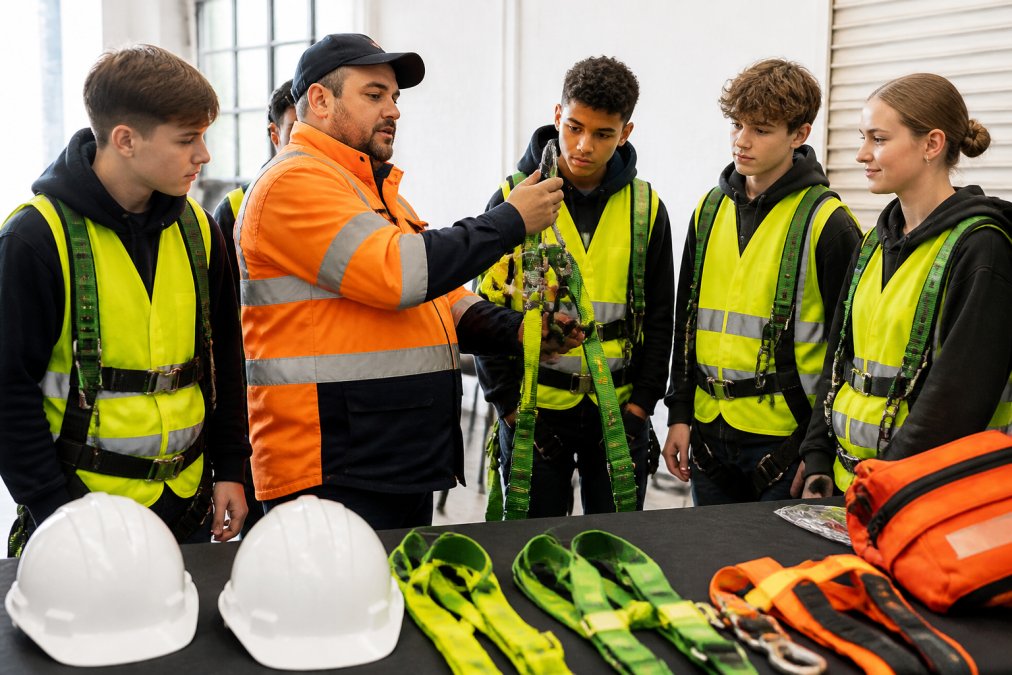
Instead of reading scenarios off a slide, they explain what actually happens on site. That matters if you’ve been out of school for years or find dense reading a struggle.
The delivery is flexible. You can train face-to-face or online, and successful students receive their certificate the same day. The training is backed by an accredited RTO, so your statement of attainment is recognised on site.
Where it falls short: you’ll need to contact the team directly for current course dates and pricing. There’s no instant online checkout, which slows things down if you’re in a rush.
If you’re nervous about the literacy demands, ask about the face-to-face option. Having a trainer read through the risk scenarios with you, and explain unfamiliar terms on the spot, removes most of the anxiety students bring to online-only formats.
Blue Dog Training: Self-Paced Online Learning for Independent Students
Students who prefer to work through material at their own speed often land on Blue Dog Training, an established RTO offering online construction induction. Its CPCWHS1001 course is nationally accredited, and the platform works on mobile, so you can chip away at modules on a lunch break.
The strength here is independence. There’s no scheduled webinar to attend, no waiting for a cohort to fill. You move when you’re ready.
The trade-off is the lack of live interaction. If you get stuck, you’re relying on phone and email support rather than a trainer in the room. For confident self-starters, that’s fine. For anyone who learns best by asking questions in the moment, it’s a genuine limitation.

Urban E-Learning: Budget-Friendly Digital Delivery with Fast-Track Options
Cost-conscious students frequently end up at Urban E-Learning, a digital provider with accredited White Card delivery. Its base course pricing starts around $43.90, which makes it one of the cheaper entry points, though you should confirm current rates directly.
The add-ons are where the real value sits for some students. Priority Express Delivery speeds up your physical card, and there are integrated PPE supply options if you need gear before your first shift. Automated progress tracking keeps you accountable without a trainer chasing you.
Here’s the catch: expedited services cost extra on top of the base fee. If speed matters and your budget is tight, factor those add-ons into your decision before you commit.
How to Choose the Right White Card Webinars Alternative for Your Situation
Picking the right option comes down to three honest questions: how you learn, how fast you need it, and how much support you want. Live webinars aren’t the only path, and for many students they aren’t the best one.
Use this checklist before you enrol:
- Does the provider deliver nationally recognised training as a registered RTO?
- Does the delivery style match how you actually learn (live, self-paced, or in person)?
- Can you get your certificate in the timeframe your job requires?
- Is there real support if you fall behind or get stuck?
- Have you confirmed current pricing and any add-on fees directly?
If you want practical context and a trainer who’s been on site, a trade-experienced provider is worth the extra effort. If you just need the credential fast and learn well alone, a self-paced digital course does the job.
The fastest course isn’t always the best one. A slightly slower option with real trainer support often gets you certified with fewer setbacks than a cheap course you struggle through alone.
Sorting out your White Card shouldn’t feel like a gamble. Eyzon Health & Safety partners with Admire Workplace Safety to deliver nationally recognised White Card and First Aid training, backed by trainers with over 10 years of hands-on trade experience. You get flexible face-to-face or online delivery, a supportive environment built for students at any level, and a same-day certificate once you pass. Get started with Eyzon Health & Safety and walk onto site with credentials that hold up.
Frequently Asked Questions
Are online White Card courses nationally recognised?
Yes, if the provider is a Registered Training Organisation (RTO) delivering the nationally accredited CPCWHS1001 unit. The statement of attainment you receive is valid across all states and territories. Always check the provider’s RTO code before enrolling. Some states also require a short face-to-face or practical component, so confirm the specific delivery format meets your local regulator’s rules.
What is the difference between a webinar and a practical training session?
A webinar delivers content live over video, so you watch and listen in real time. A practical session involves hands-on activities, such as identifying hazards, using PPE correctly, or practising emergency procedures in person. For construction induction, practical elements help you retain safety knowledge better because you physically rehearse the skills you’ll use on site every day.
How do I ensure my White Card training provider is accredited?
Check the provider’s website for their RTO code and verify it on the national training register. A legitimate provider will issue a nationally recognised statement of attainment, not a generic certificate. You can also ask whether they are approved by the relevant state safety regulator. If a provider cannot give you an RTO code, walk away and find one that can.
Why is face-to-face training recommended for construction induction?
Face-to-face training lets you ask questions immediately, practise safety procedures with real equipment, and get feedback from trainers who have worked on site. Research into adult learning consistently shows that hands-on practice improves retention compared with passive video watching. For students new to construction, that practical grounding makes the transition to a live site safer and less overwhelming.
What are the current construction induction training requirements for students in 2026?
You must complete the nationally accredited CPCWHS1001 unit, commonly called the White Card course. The training covers hazard identification, risk control, emergency procedures, and WHS legislative responsibilities. Once you pass, you receive a statement of attainment that lets you access construction sites. Some states also require you to carry a physical card or register with the local safety authority.